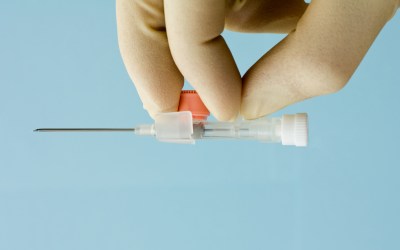
Vascular Access Devices (VADs) are divided into two basic groupings, peripheral and central. The group delineation is determined, primarily, by the catheter tip termination position, rather that the insertion site. Peripheral catheter tips remain in the periphery, terminate distal to the subclavian or femoral vein, and are optimal for intravenous medications that are peripherally compatible.
A platform for clinicians to share and increase knowledge about topical, innovative issues in Vascular Access & Infusion Therapies with the aim of ensuring safe patient-centered IV practices.
VascuFirst is a Vygon initiative.
Midline Catheter at home
This pandemic has confirmed a reality for us: hospitals are for acute patients. Although this is not new, we are now able to put it into action: now more than ever our home is our shelter. Home health care, specifically in the field of vascular access, IS feasible.
Peripheral Intravenous Catheters (PIVCs) versus Long Peripheral Catheters (LPCs) for Multi-day Intravenous (IV) Therapy: Current Evidence
Intravenous (IV) therapy is one of the most common interventions administered to hospitalized patients. PIVCs, also known as ‘cannulas’, are the standard devices used to deliver IV therapy and are essential for the provision of fluids, basic medications and blood products.
Highlighting the Risks of Hazardous Drugs Contamination in Oncology Day Units
Click here to watch a video about the risks of hazardous drugs contamination in Oncology Day Units.
Cutaneous Complications in Vascular Access: MARSI
If we consider the skin to be a shield, barrier or a protective layer, it is easy to understand why it is essential to maintain good skin integrity to avoid complications. Monitoring skin integrity...
Digital Sedation™ at the service of patients in a Vascular Access Unit
Before a surgical procedure such as a vascular access device placement, many patients are particularly anxious. To help relieve their anxiety, health facilities and surgical units give them the...
When should I remove a PICC if it is infected?
An increasing number of hospitalised patients require the use of venous access devices (VADs). Intravenous therapy has therefore been a topic of high clinical relevance in recent decades. There are currently several types of catheters, and the choice between them depends on a number of factors.
What you need to know about infusors
What is an infusor? In recent decades, infusors have been used for continuous drug administration. The development of these devices is a major breakthrough in this field, as maintaining stable...
Revised Standards of Practice for Vascular Access and Infusion Therapy
Due to the invasive nature of vascular access and infusion therapy, the potential for risk and complications associated with the specialty is high. Therefore, it is essential that competent,...
How to locate the tip of a PICC
Today, the peripherally inserted central catheter, PICC, is a widely used vascular acces device. Its use is spreading, thanks to a simple and fast insertion technique. This allows nursing teams to...
Complications in ports: pinch off syndrome
Ports, fully implanted venous devices, are the longest lasting vascular accesses and offer excellent performance in chronic ill patients, particularly oncological patients. However, the reservoir can lead to certain complications, some well known such as obstruction or infection, and others less frequent, such as pinch off syndrome.
AFIC-VYGON Cancer Nurses Survey
The literature on the experiences of patients living with a CVAD suggests that the devices are accepted by patients, with the main attraction being a reduction of repeated painful cannulation (Yamada et al, 2010; Sharp et al, 2014; Alpenberg et al, 2015; Song and Oh, 2016; Parás-Bravo et al, 2018)…